Te Hikutū
Te Hikutū of Te Puna and Rangihoua held one of the first trading anchorages in the Bay of Islands, sent some of the first northern travellers to Sydney and England, and hosted the first mission. By early 1810 the whalers blamed them for the Boyd. This post covers three of their rangatira: Te Pahi, Ruatara and Waikato.
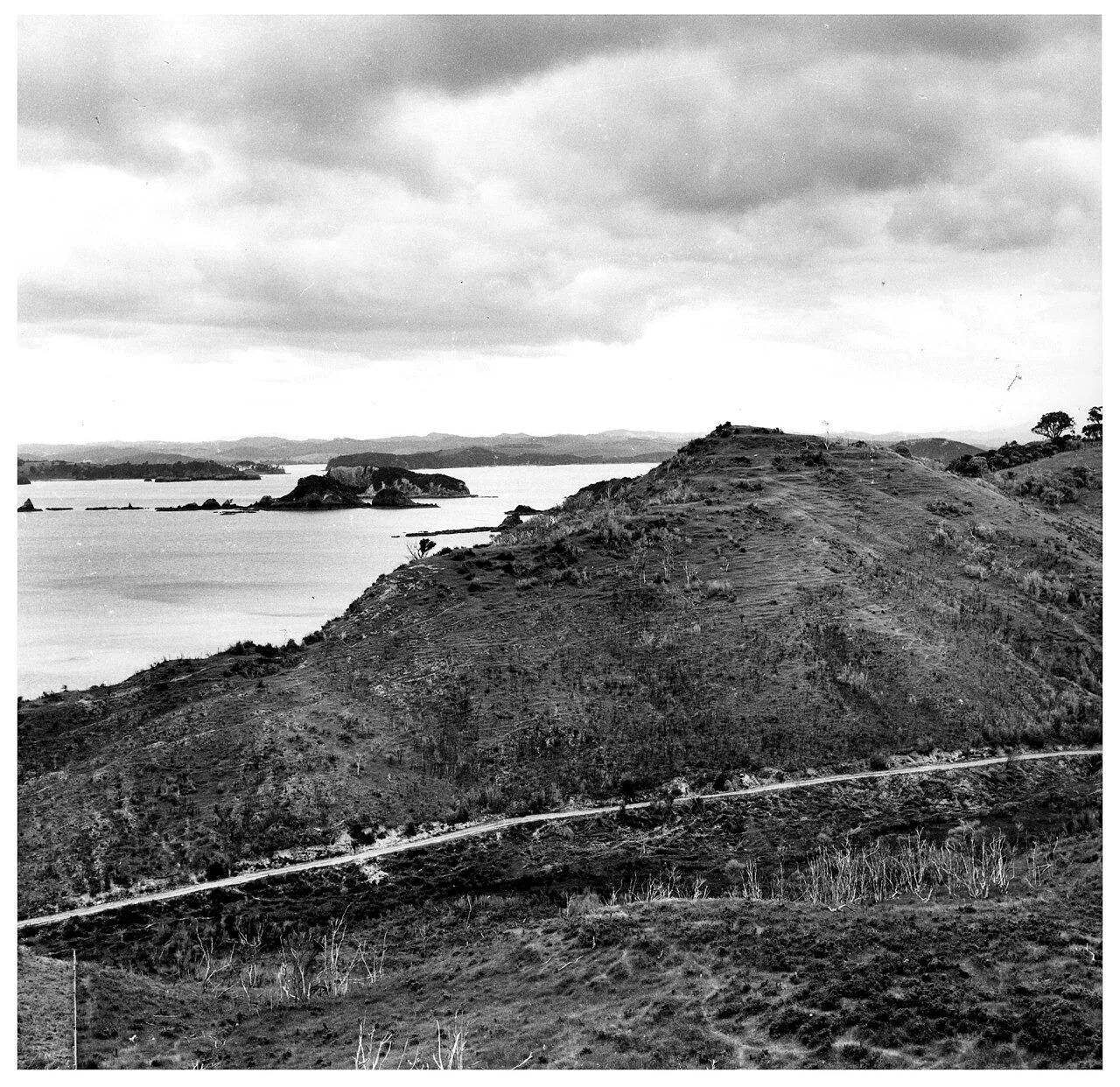
Hapū/Te Hikutū
Te Hikutū trace their descent to Kairewa and Waimirirangi. Kairewa was a son of Tūpoto and a grandson of Taurapoho, on the Kaharau side of Rāhiri's line, and Patu Hohepa's Hokianga history has the couple raising their children at Whirinaki, where Kairewa held the valleys of Ouē and Whirinaki. Whirinaki in Hokianga stayed the heartland of Te Hikutū.
In the Bay, Te Hikutū lived on the Purerua peninsula at Te Puna and Rangihoua, on the northern side of the Bay. Anne Salmond's map of Bay of Islands chiefs for 1805 to 1815 lists Hikutū with Te Pahi, Ruatara, Te Uri-o-Kanae and the tohunga Rākau, with the line running to Rangihoua. Te Puna was a safe anchorage, and colonial whalers used it. Kororāreka, across the Bay under Tara, was its rival.
Accounts differ on how Te Hikutū came to Rangihoua. Ballara's biography of Ruatara has Te Hikutū people moving there after Ruatara married Rahu, a daughter of Rākau. Middleton quotes Wharepoaka saying that Waikato's own place was Whananaki, and that Waikato came to Rangihoua to live when he married Wharepoaka's sister Hira. Sources disagree more on Te Pahi's own hapū. Ballara makes him the son of Wharerau, of the old Ngāti Awa people of the area and their Ngāpuhi conquerors, related to Ngāti Rēhia and "probably" to Te Hikutū and Ngāti Rua. The Tribunal's Te Raki report places Te Hikutū at Te Puna. Accounts of his whakapapa above his father conflict, and I've left it off the chart.
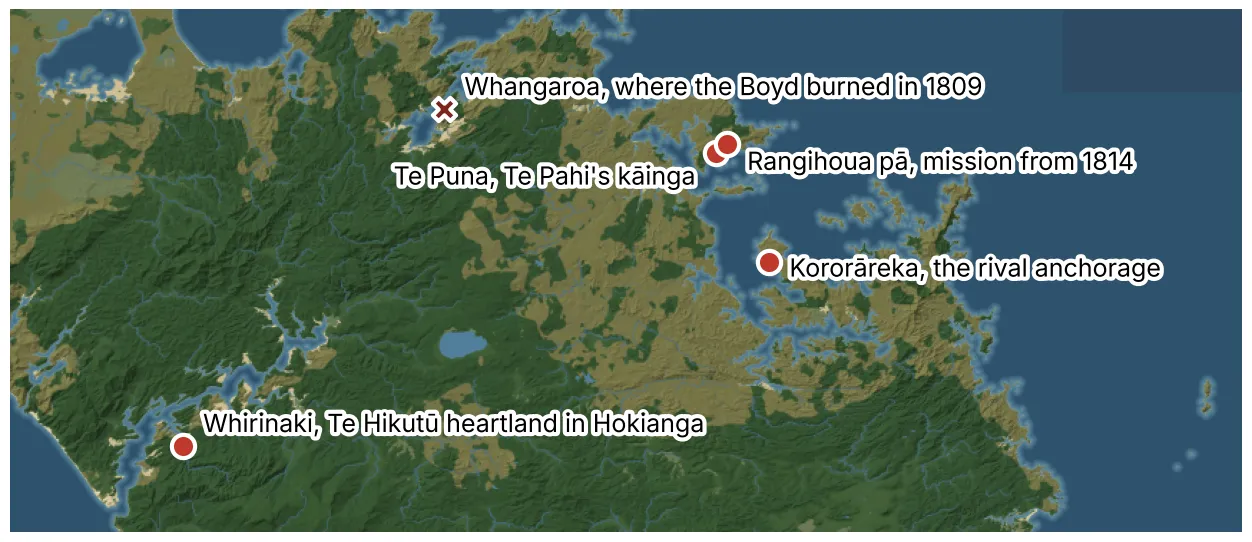
Rangatira/Te Pahi, Ruatara and Waikato
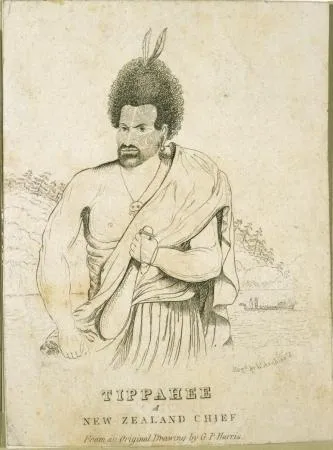
Te Pahi
By 1800 Te Pahi was one of the senior chiefs of the north-western Bay. His main pā stood on a small island called Te Puna, between Rangihoua Bay and Moturoa, where he kept his weapons and treasures. In 1805 he and four of his sons took passage on the Venus to visit Philip King, who had a name in the north for generosity to Māori. The master mistreated them and tried to keep Te Pahi's eight-year-old son as payment. At Norfolk Island Captain John Piper rescued the boy and found them passage to Port Jackson, where they arrived on 27 November 1805.
Te Pahi spent three months at Government House as King's guest. He came home in February 1806 with iron tools, fruit trees, livestock and a small prefabricated house to put up at Te Puna for European visitors. He had asked about sheep farming and the law, and the harshness of English sentences for petty theft horrified him. In Sydney he met Samuel Marsden, who began planning a mission under his protection. King gave him a silver medal. One of his sons, Matara, reached England in 1807 and met George III.
In December 1809 Whangaroa people took the Boyd. Alexander Berry, investigating from the Bay, decided Te Pahi was responsible, and Tara of Kororāreka worked to convince the whalers. On 26 March 1810 the crews of five whaling ships took Te Pahi's island, killed about 60 of his people and burned his houses. He escaped wounded, and within weeks he died of a wound from fighting with the Whangaroa people over the Boyd. Marsden later worked to clear his name, arguing that the whalers had confused him with Te Puhi of Ngāti Uru. Ballara concludes that his part "will probably remain unclear". The medal disappeared in the raid and turned up at a Sydney auction in 2014. Te Papa and Auckland Museum bought it together with Ngāpuhi support, and it went on display in 2017.
Ruatara
Ruatara was about 22 in 1809, by Marsden's estimate, and sources disagree on his parentage. Marsden believed his father was Kaparu, Te Pahi's younger brother, and his mother a sister of Hongi Hika. Later research gives his father as Te Aweawe of Ngāti Rāhiri and Ngāti Tautahi, and his mother as Tauramoko of Ngāti Rāhiri and Ngāti Hineira. My data and the chart follow the later reading.
He left the Bay in 1805 on the whaler Argo, wanting to see George III, and spent four years on whaling ships. Some masters treated him well. Others beat him, starved him and cheated him. He reached England in 1809, but the crew kept him from landing. Marsden found him sick and coughing blood on the convict ship Ann and took him home to Parramatta, where Ruatara spent eight months planning to bring wheat to the north. A whaler that agreed to take him home dumped him on Norfolk Island instead, and he didn't reach Rangihoua until about 1812.
By then Te Pahi was dead, and Ruatara took up his mana. He handed out seed wheat, and few believed bread could come of it until a hand mill arrived in 1814. That year he sailed to Sydney on the Active and came back on 22 December with Marsden and the first Church Missionary Society families, under his protection at Rangihoua. He built the enclosure for Marsden's Christmas Day service. People in Sydney had warned him that missionaries came before soldiers and settlers, and the doubt stayed with him. He fell ill in February 1815 and died on 3 March. His wife Rahu died the next day.
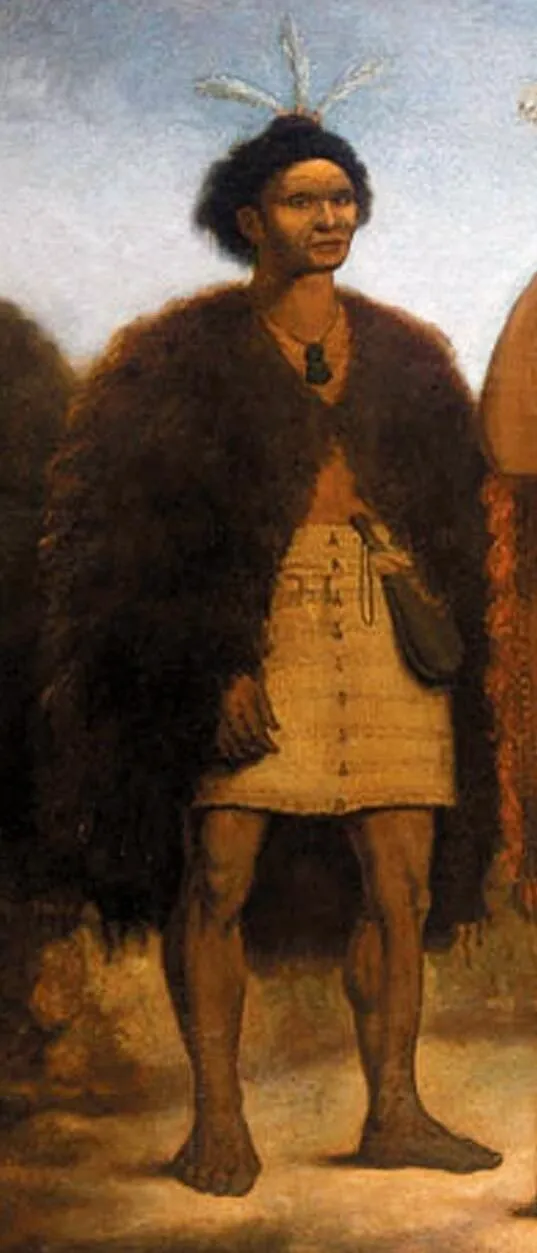
Waikato
Waikato was a young man in 1810. He was a son of Puketawa, and Sissons, Wi Hongi and Hohepa trace his line back to Kairewa. He married Hira, a daughter of Rākau and a sister of Rahu and Wharepoaka. In 1820 he went to England with Hongi Hika and Thomas Kendall, worked with Professor Samuel Lee on the grammar at Cambridge, and met George IV. Back home he helped choose Te Kara, the flag of the United Tribes, in 1834, and signed He Whakaputanga in 1835. He took the baptismal name Hōhaia Parata in 1844 and died in 1877.
Playthrough/Missions, the Boyd and travel overseas
Te Hikutū is a small start with the biggest window onto the Pākehā world in the north. Of the game's systems, I lean on contact hardest here: ships, Sydney, the mission, and what each one costs.
The start
In January 1810 I seat Te Pahi at Te Puna, with about 100 people, and the hapū holds Rangihoua pā with about 285, both my estimates. Te Hikutū sits in the northern grouping, kin to Hongi's people. The roster names Te Pahi, Rākau, Wharepoaka, Te Uri-o-Kanae, Rahu and Waikato among its people.
Ruatara isn't on the starting roster. In January 1810 he was in Parramatta, and he didn't get home for two years. He arrives by event around 1812, carrying seed wheat, tools and what he learned, with whatever luck the ships gave him. If Te Pahi is dead by then, the hapū has to settle the succession again.
The Boyd
Every hapū hears the news of the Boyd in the first turn, and Te Hikutū hears its own leader named. The whalers blame Te Pahi, and Tara at Kororāreka has good reason to keep them believing it. In 1810 the whalers acted on that belief with an armed raid on 26 March. I leave the date open in the game. The blame weighs on Te Hikutū's standing with Pākehā shipping, Tara keeps feeding it, and a raid grows likely if the player lets it ride. The player can send word to Sydney, host the captains, press the Whangaroa people over the Boyd plunder, or hold the island and wait.
Travel overseas
Te Pahi, Ruatara and Waikato show three ways a trip abroad can go. Te Pahi came home with gifts, a governor's favour and a mission promise. Ruatara came home late, beaten and cheated, but with knowledge no one else in the Bay had. Waikato came home from England with Hongi and the muskets. Sending a rangatira away on a ship takes him off the roster for months or years, with a real chance of mistreatment or death, and returned travellers are one of the main ways new knowledge reaches a hapū.
The mission
Te Hikutū is the natural host for the first mission. Under the plot rules a mission needs a patron with a seated rangatira, enough standing with Pākehā, and a supply line to an anchorage, and Rangihoua has all three. The land deals table already seeds the 1815 Rangihoua purchase, 200 acres for 12 axes, which I still need to check against the Old Land Claims. Missionaries bring tools, literacy and a steady pull of ships. They refuse to trade in muskets, though, and they bring the risk Ruatara feared.
The start's hardest test is succession. Te Pahi dies in the first months if history runs its course, Ruatara is still abroad, and Ballara describes the next heir, Te Uri-o-Kanae, as unable to lead. At the hui that follows, the hapū decides whether Te Hikutū keeps its anchorage or folds into a larger neighbour.
If you hold kōrero about Te Hikutū, Te Pahi, Ruatara or Waikato that differs from what I have here, I want to hear it.
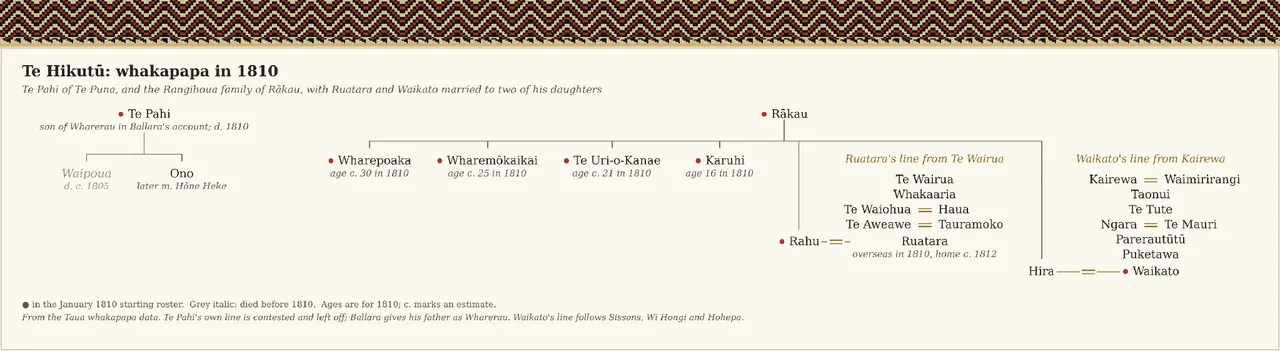
Image credits
- Rangihoua Pā, Pēwhairangi (Bay of Islands). Archives New Zealand. CC BY-SA 2.0, via Wikimedia Commons.
- Te Pahi, engraving after G. P. Harris. Public domain, via Wikimedia Commons.
- James Barry, Waikato, detail of The Rev. Thomas Kendall and the Māori chiefs Hongi and Waikato, 1820. Alexander Turnbull Library, G-618. Public domain, via Wikimedia Commons.
- Map and whakapapa chart: Taua data and base map.
Sources
- Angela Ballara, "Te Pahi", Dictionary of New Zealand Biography, 1990.
- Angela Ballara, "Ruatara", Dictionary of New Zealand Biography, 1990.
- Anne Salmond, Between Worlds: Early Exchanges between Maori and Europeans, 1773 to 1815, 1997.
- Angela Middleton, Pēwhairangi: Bay of Islands Missions and Māori 1814 to 1845, 2014.
- Patu Hohepa, Hokianga: from Te Korekore to 1840, Wai 1040 #E036, 2011.
- Jeffrey Sissons, Wiremu Wi Hongi and Pat Hohepa, Ngā Pūriri o Taiamai, 1987.
- Waitangi Tribunal, He Whakaputanga me te Tiriti (Wai 1040), 2014.
- "He Whakaputanga signatories: Waikato", NZHistory, Manatū Taonga.
- Mark Stocker, "A silver slice of Māori history: the Te Pahi medal", Tuhinga 26, 2015.
Comments