Pōmare I and Pōmare II
Whētoi of Ngāti Manu took the name Pōmare in 1814, and his nephew Whiria took it on his death. Between them they held the southern shore of the Bay of Islands for most of the musket years. They traded harder than anyone in the Bay, fought Hongi's northern alliance for the shipping, and built Ōtūihu into a pā that rivalled Kororāreka. In January 1810 the elder was a southern war leader with a cove, some gardens and a talent for trade.
Hapū/Ngāti Manu and Ngā Uri o Pōmare
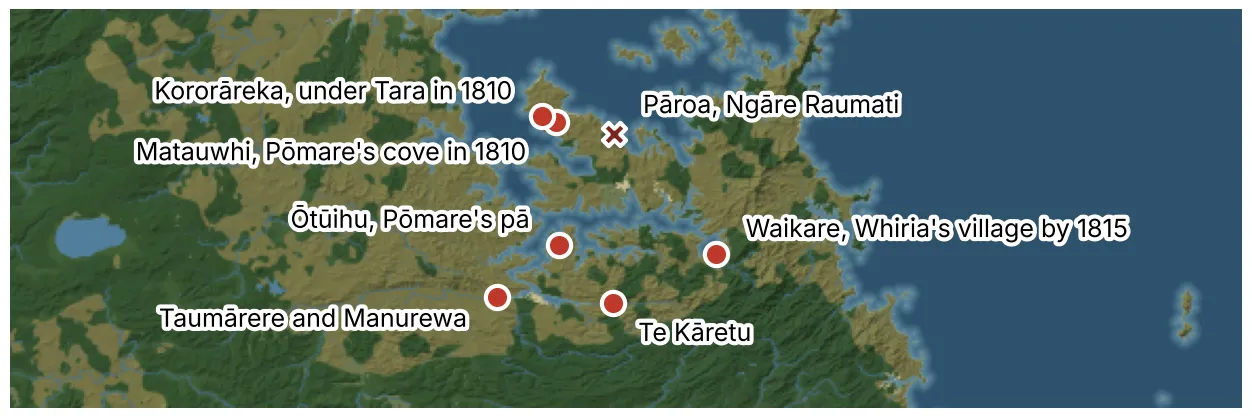
Ngāti Manu began at Tautoro, south of Kaikohe. Angela Ballara writes that quarrels with Ngāti Toki drove them out during Pōmare's lifetime, and one group followed his aunt Hautai to Manurewa, near Taumārere. From there Pōmare and other rangatira set up pā and kāinga at Kororāreka, Matauwhi, Ōtūihu, Waikare and Te Kāretu. Pōmare held Matauwhi, the cove south of Kororāreka now called Pōmare Bay. Ngāre Raumati held Pāroa and Te Rāwhiti beyond him, and they had fought Ngāpuhi for two generations.
Ballara names Pōmare's father as Puhi of Ngāti Manu, and the Boss Tipene notebook agrees. One 1966 account gives his name as Tūwhanga. My data follows Puhi and runs his line from Inumanga and Peketahi through Te Wharenui and Hinepapa, the Ngāti Manu branch on the hapū chart in the opening post. Ballara connects Pōmare to Ngāti Rangi, Ngāti Rāhiri, Ngāti Hine and Ngāti Wai.
In her book Taua, Ballara writes that Hongi's peace with Waikato "mattered little to Pomare, who was of Ngati Manu, not Nga Puhi." She adds that Ngāti Manu more often allied with Te Wera Hauraki and Murupaenga of Ngāti Rongo than with the Ngāpuhi of Waimate and Kerikeri. The name Ngāpuhi covers Ngāti Manu today. In the 1820s some people drew the line in a different place, and that line moved with the politics.
The hapū name Ngā Uri o Pōmare means the descendants of Pōmare. Whētoi took the name Pōmare four years after the game opens, so in 1810 the hapū name lay in the future. I carry the hapū under that name from the first turn so players can find it. I'd like to show the 1810 name and switch it when he takes Pōmare, and I'm still working out how.
Rangatira/Whētoi and Whiria
Pōmare I
Ballara puts Whētoi's birth in the latter part of the 1700s. In October 1814 Samuel Marsden told Bay people about the conversion of Pōmare of Tahiti, and Whētoi took the name on the spot. His elder sister Haki was the mother of Whiria.
He made his name in trade before war. The first missionaries came for timber, and he supplied it fast. He traded for iron tools so his people could grow a surplus, and traded the surplus for muskets to hold off the northern alliance of Hongi Hika, Tāreha, Rewa and Ruatara. The missionaries called him artful, covetous and boastful. The same missionaries wrote that he showed compassion, judged European goods better than anyone in the Bay, and proved the most useful to them of all the Bay leaders. He sailed to Port Jackson on the Active in July 1815. By 1819 the missionaries counted him among the four most important men in the Bay, with Hongi, Te Whareumu and Rākau. That year he and the Taiāmai chiefs complained to Marsden that the mission was putting the iron trade into Hongi's hands.
The campaigns came in his last seven years:
- 1820: a taua to the East Coast and a six-month siege of Te Whetū-matarau at Te Araroa. He took the pā and brought Te Rangi-i-pāia, its highest-ranking woman, home as a wife.
- 1821: Mauinaina at Tāmaki with Hongi. Ballara records that he withdrew from Te Tōtara because he disapproved of the plan to take it by treachery.
- 1822: Tūhua, then up the Whakatāne valley into Tūhoe country.
- 1823: Mokoia at Rotorua, where he quarrelled with Hongi and wanted to settle it with weapons on the spot. Hongi refused. On the East Coast afterwards he made peace with Te Rangi-i-pāia's people.
- 1824: Kaipara, then Wairoa and Waikaremoana as an ally of Te Maitaranui. He brought a party of Ngāti Kahungunu home and settled them at Te Kāretu.
- 1826: by one account Hongi met him in the Hauraki Gulf and warned him to turn back. He went on up the Waipā, and a force of Marutūāhu and Waikato peoples killed him and most of his party at Te Rore, his son Tītaha among them.
People called him Pōmarenui after his death. In July 1826 Hongi led 150 men from Waimate to strip Ngāti Manu of goods as payment for it. Ballara explains that a hapū could owe its own allies for the death of a chief, on the thought that more of them should have gone to war beside him.
Pōmare II
Whiria's link to Ngāti Manu came through his mother Haki. His father, Te Tautoro, descended from Rangiheketini and Hineira, and Ballara notes that Whiria was kin to Tara of Kororāreka and his heir Te Whareumu. By 1815 he led a village in the Waikare district and already traded with ships. After his uncle's death he took the names Whētoi and Pōmare, to remind his people of the debt they owed.
His rise began in 1828, when Te Mahurehure of Waimā killed Te Whareumu and Tiki, Pōmare I's last surviving son. Two years later the Girls' War broke out on the beach at Kororāreka. Tītore then took Kororāreka as utu for Hengi of Ngāti Rēhia, and Ngāti Manu withdrew to Ōtūihu. Pōmare built a new pā there with room for cannon, and spent the next fifteen years turning it into a rival anchorage. He sold pork, potatoes and timber, ran grog shops and levied tolls on shipping. He seized property from Pākehā who offended him, Clendon's whaleboat in 1832 and Thomas King's boat in 1833. In 1837 he fought a three-month war with Tītore, who at one stage sent 800 men in 40 canoes against Ōtūihu, and 131 Europeans living in the pā helped defend it. Captain Hobson watched that war, and his report helped bring British intervention.
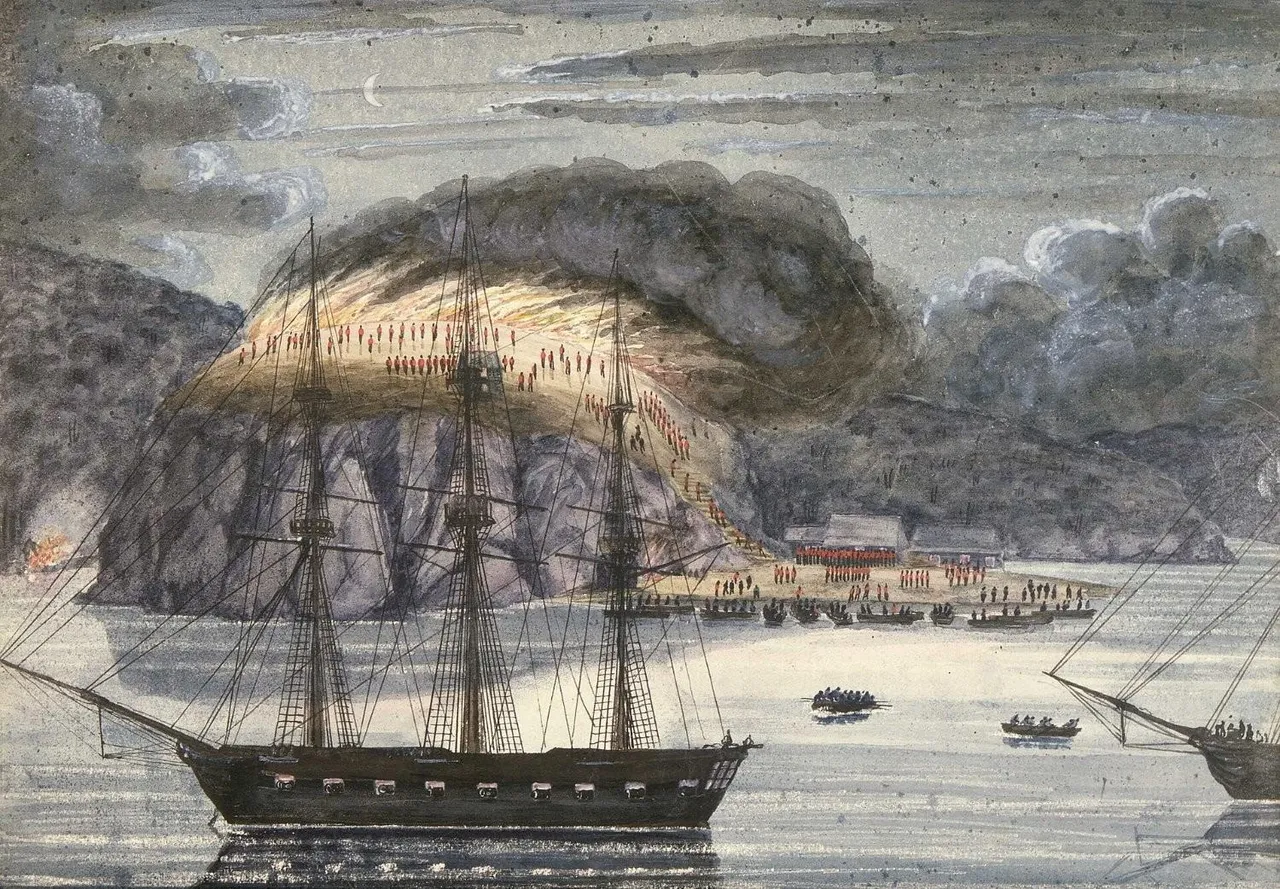
Pōmare signed the Treaty on 17 February 1840 and brought in Tirarau and Kawiti. He stayed neutral when Heke and Kawiti went to war. Troops arrested him in his pā on 30 April 1845 and burned it while he flew a flag of truce. Nene secured his release. He became a Christian in his last year and died in 1850.
Playthrough/Anchorages and trade rivalry
Of the game's systems, I lean on trade hardest here. In this start the player competes for ships: drawing them, taxing them and holding the beach they land on.
The start
In January 1810 I seat Whētoi at Ōtūihu with about 290 people, and his hapū holds Matauwhi with about 70 more. Six other Ngāti Manu seats share the southern grouping with him, among them Tara's at Kororāreka, Te Koki's at Paihia, and the Ōpua and Te Kāretu kāinga. His mother Tuwhangai, his wife Waihanga of Te Kapotai, and his son Tiki sit on the roster with him. Haki and Te Tautoro live at Kawakawa, and Whiria starts at about twenty.
Writing this post turned up two faults in my data, and I've fixed both. The occupancy table gave Kororāreka and its 360 people to Pōmare, when Ballara's biographies put the beach under Tara in 1810, so Tara now holds it. The roster made Haki younger than her brother, though Ballara calls her the elder, so I've redated her to around 1752 and Whētoi to around 1755.
Anchorages
The trade rules give every anchorage an infrastructure tier, from a bare beach up to a landing, a trade post and a whaling station. Captains prefer better harbours, so a Tier 3 harbour draws more ships than a Tier 1 cove. A trade post needs a Pākehā Māori trader hosted for a year. Muskets arrive through that trade and the game counts them one by one, while iron tools, blankets and the rest work as buffs that fade unless ships keep coming.
Pōmare I's method fits those rules: iron tools for gardens, gardens for a surplus, the surplus for guns. I've marked Ōtūihu as a first-rank anchorage, as good a harbour as Kororāreka, with Ngāti Hine holding a cross-claim through the inland route. A Ngāti Manu player can build it up from 1810, but the ships start at Kororāreka, and in 1810 the Boyd has scared most of them away.
The rivalry
Pōmare's complaint of 1819 is the heart of this start. Marsden planted his mission at Rangihoua under Ruatara and then at Kerikeri under Hongi, and the iron followed the mission. A southern player has to pull ships the other way, through better prices, safer anchorage or more food. Kororāreka is the prize: by the 1830s it was the busiest beach in the country. If the player loses it, as Ngāti Manu did in 1830, Ōtūihu becomes the fallback, and I want the tolls, the grog trade and the resident Pākehā to make that fallback worth building.
The same ships carry the bill. Under the rules a trade post raises disease pressure and a whaling station raises it further. In 1845 Pōmare II's crowded pā drew the Crown's troops.
Losing a war leader
If history runs, Pōmare I dies at Te Rore in 1826, and Ngāti Manu gains an account against Ngāti Maru and Waikato. Whiria inherits the names and the debt. Ballara writes that attempts to avenge Pōmare "had little effect", and that his death shook Ngāpuhi confidence. I want the succession hui and Hongi's muru to land in the same season, so the player feels the cost of a chief who died far from home with too few men.
If you hold kōrero about Ngāti Manu, Pōmare I or Pōmare II that differs from what I have here, I want to hear it.
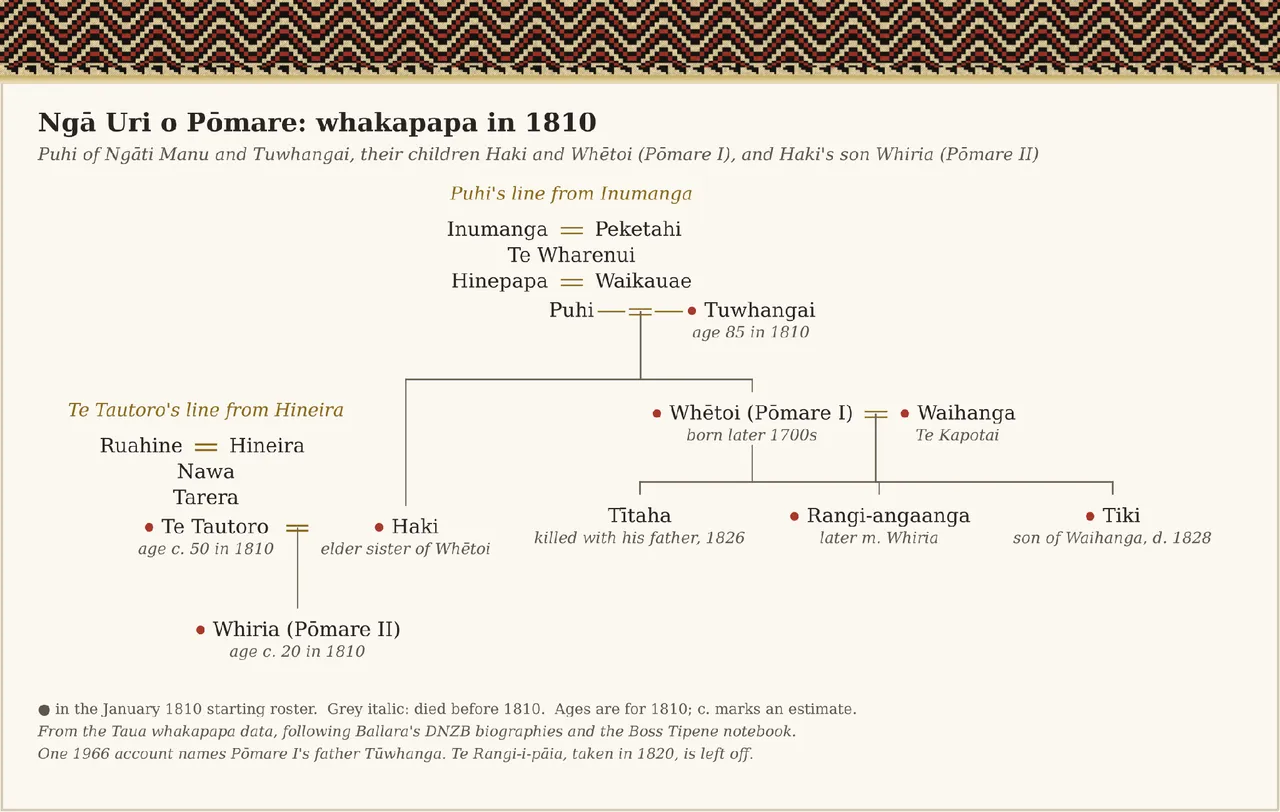
Image credits
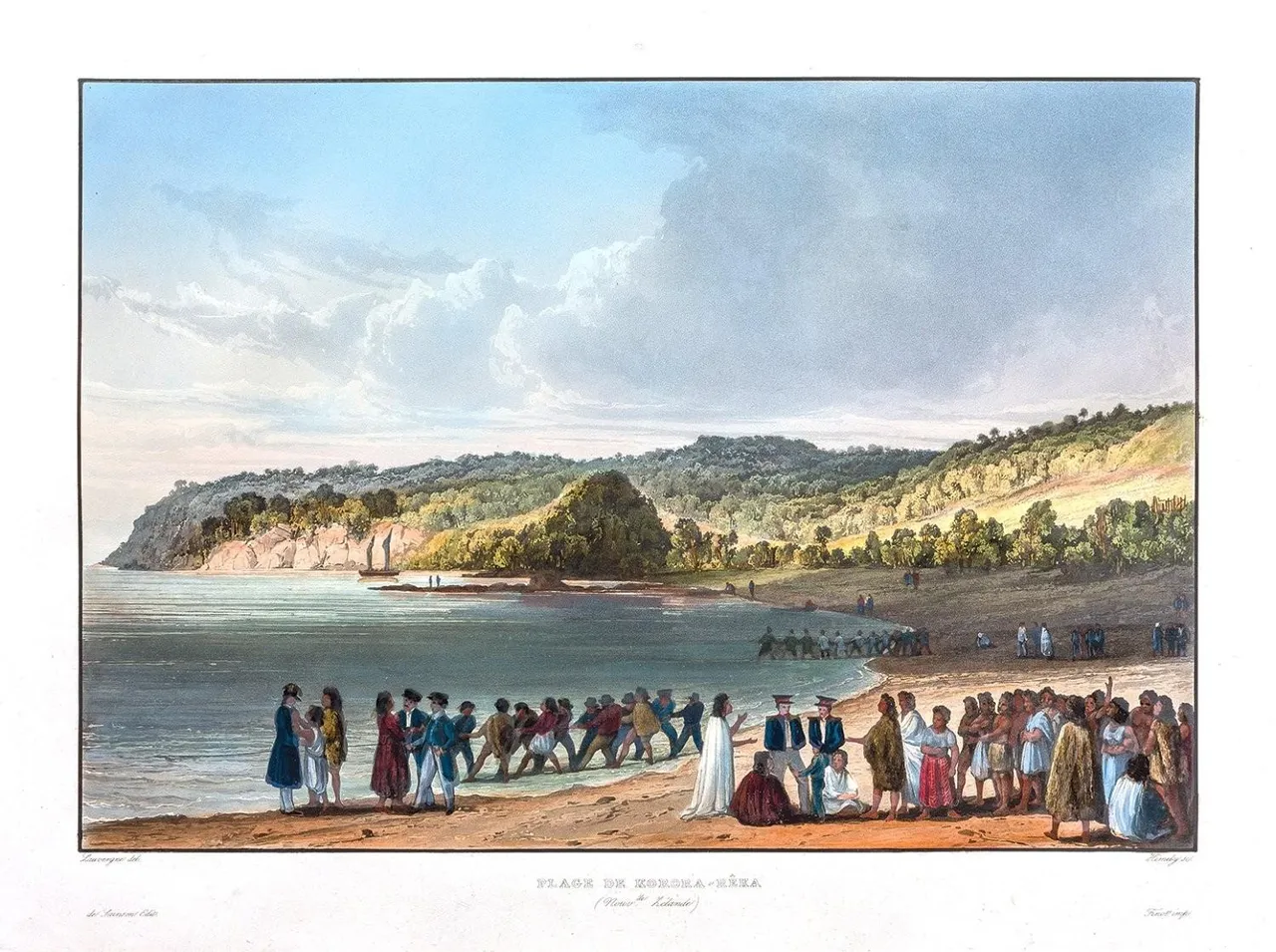
- Barthélemy Lauvergne, Plage de Korora-Rêka, engraved by Sigismond Himely, 1835. Public domain, via Wikimedia Commons.
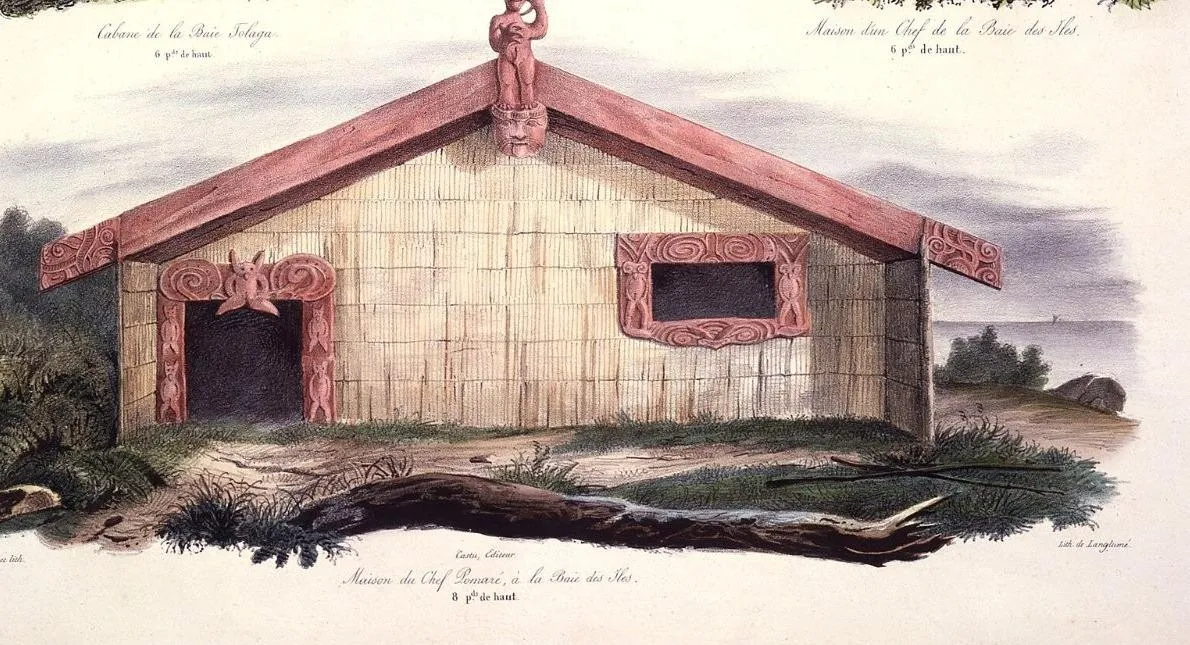
- Louis Auguste de Sainson and Langlume, Maison du Chef Pomare, à la Baie des Îles, 1827–33 (detail). Public domain, via Wikimedia Commons.
- John Williams, HMS North Star destroying Pōmare's pā, Ōtūihu, about 1845. Public domain, via Wikimedia Commons.
- Map and whakapapa chart: Taua data and base map.
Sources
- Angela Ballara, "Pōmare I", Dictionary of New Zealand Biography, 1990.
- Angela Ballara, "Pōmare II", Dictionary of New Zealand Biography, 1990.
- Angela Ballara, Taua: "Musket Wars", "Land Wars" or Tikanga?, 2003.
Comments