Core loop
“Ruia taitea, kia tū ko taikākā anake.” / Strip away the sapwood, so only the heartwood stands.
Game Mechanics
The next step from here will be refining and listing out what game mechanics are needed, building a database of academic research around those areas, and working out how we can best translate these cultural imprints into game mechanics. Rather than build every system at once, I’m starting with a core slice. One hapū, played from January 1810 up to the Treaty. That covers the first half of the game as set out in the concept post: the upheaval, the musket years and the utu that drives them. If the slice holds up, the colonial half gets built on top of it.
Pillars in the core slice
Each pillar needs to be represented mechanically
- Tikanga, above all. Every system gets checked against the sources before it goes in. Rangatira take requests rather than orders, because the sources describe leaders who couldn’t simply command their people. Garden work carries the tapu Best records for planting and harvest.
- Utu. You start with an inherited ledger of grievances and debts from before 1810. Outstanding entries drain your mana, your actions write entries into other hapū’s ledgers, and they work to balance theirs.
- A Reactive World. Every other hapū runs on the same systems you do. Events come out of the state of the world: a raid, a death, a ship coming in, a failed harvest.
- Time Marches On. Turns are monthly. Seasons aren’t locked, but they’re enforced through costs, so your toa have to come home for the harvest or you lose it.
- Whakapapa Matters. The whakapapa database drives who answers your call and who refuses it. When you ask a rangatira to take on a task, how closely they’re related to you is part of their answer.
- Unfolding Information. You see your neighbours clearly and distant hapū through rumour, trade and visitors. Muskets and ships arrive through trade and contact, not on fixed dates.
Out of Core Slice Scope
- The Treaty and colonial authority
- Missionaries and the spiritual systems in depth (missions arrive as events and plots only)
- Migration and conquest
- Confederations and kingship
- The full trade economy
- Taurekareka beyond event level, which waits on consultation
- More than one playable hapū
The Core Loop
Monthly turns
The game runs on monthly turns, twelve a year. It opens with news of the Boyd, burned at Whangaroa the month before, and shipping to the north falling away after it. I went with months over seasons because the Māori year doesn’t break into four neat blocks. Planting, harvest, birding and the eel runs each have their own windows, and seasonal turns were too coarse to capture them.
Food and labour
The core of each turn is deciding where your people go. You split one pool of people across gardens, fishing and birding, works like pā and storage pits, taua, and later trade goods like dressed flax and timber. Food comes in two forms. Fresh food gets eaten that month. Stored food, such as kūmara in the rua, birds preserved in fat and dried fish, carries you through the lean months and pays for everything beyond survival.
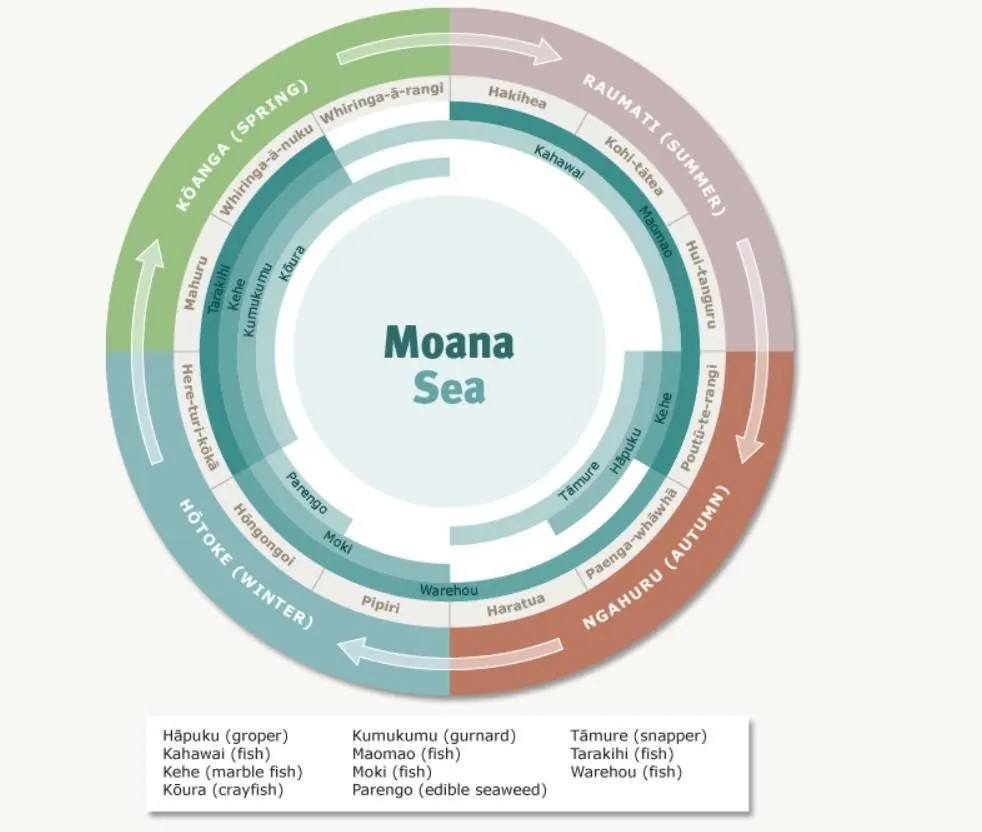
What you can gather depends on the resource sites near your settlements and when each one is in season, so a Bay of Islands hapū and a Taupō hapū eat to different calendars. Working through the seasonal charts, the hungry gap stands out. From August to October the rivers and forest give little, stores are at their lowest, and kūmara planting needs the most hands.
Seasons
No action is locked to a season. The seasons work however to encourage historical play through costs and bonuses instead. Planting was tapu work. Best records fasting, no fires and no contact between the workers and their families while it went on, so labour put on planting or harvest stays there for the month. You can send a taua out in October, but it costs you next year’s crop. November to March gives a mustering bonus, once the gardens need only guarding. The historical rhythm comes out of the choices you make.
The potato matters here. It’s easier to grow and keep than kūmara, carries none of its tapu, and freed up labour that used to go to fern root, fowling and fishing. Which hapū had potatoes and pigs in 1810 is seeded from sources, so the labour freed for war and trade grows out of the economy.
Requests, not orders
You can’t order a rangatira around, even in your own hapū. You ask, and they weigh their mana against yours, how closely they’re related to you, whether their whānau back it, and the risk. They can say no. Winiata describes an ariki “unable to force himself on other groups”, and Sutton found no permanent paramount chief at Pouērua, where decisions came through negotiation.
Each turn is limited by three things: how many rangatira you have to take on tasks, how many people you can put behind each one, and how much mana you’re willing to put at stake.
Actions
A few actions will sit inside the loop from the start to enable testing and balancing:
- Hākari turns stored food into mana and goodwill, and every basket served is one less for winter.
- Rāhui closes a stream, grove or fishing ground. It takes a rangatira with mana, and rivals can break it.
- Peace-making works through envoys or a rangatira from outside the quarrel, at any stage of a conflict.
- Tangihanga follows a rangatira’s death. The whānau pani stop work, kin arrive and are fed from the stores, and the dying words can bind the hapū to utu.
Comments